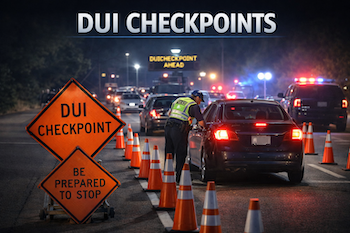
 DUI checkpoints, also known as sobriety roadblocks, are a common enforcement tool used by law enforcement in Will County to detect impaired drivers, but they must strictly comply with constitutional requirements—otherwise, evidence obtained can be suppressed, potentially leading to dismissed charges. As a Joliet DUI defense attorney with over 20 years of experience, including my time as a former Will County prosecutor, I've successfully challenged DUI arrests stemming from checkpoints in cases across Joliet, Bolingbrook, Plainfield, and other areas, often resulting in reductions, dismissals, or avoidance of harsh penalties like license suspension and ignition interlock requirements.
At Will County DUI Lawyers, we specialize in scrutinizing checkpoint procedures to protect your rights in these high-stakes encounters. In this blog post, we'll explain the legality of DUI checkpoints under Illinois law, common issues that arise, your rights during a stop, and effective defense strategies for 2026. For related topics, see our guides on Field Sobriety Tests in Will County DUI Cases and Implied Consent Laws and Refusal to Test
What Makes a DUI Checkpoint Legal in Illinois?
DUI checkpoints in Illinois must adhere to strict guidelines established by the U.S. Supreme Court and Illinois case law to avoid violating the Fourth Amendment.
Key requirements include:
- Neutral Selection: Vehicles stopped in a predetermined, systematic pattern (e.g., every car or every nth car) without discretion based on appearance.
- Advance Public Notice: Checkpoints should be publicized in advance (though not always required), with visible signage, marked police vehicles, and adequate lighting/safety measures.
- Minimal Intrusion: Brief stops focused solely on impairment detection, with no fishing expeditions for unrelated offenses.
- Supervisory Oversight: A neutral, supervisory officer must plan and oversee the operation.
In Will County, checkpoints are frequently set up on major routes like I-55, Route 53, or in Joliet and surrounding suburbs during holidays or high-enforcement periods. Violations of these rules—such as random targeting, lack of safety protocols, or extending stops without probable cause—can render the entire stop unconstitutional. For the foundational case law, refer to the U.S. Supreme Court decision on sobriety checkpoints .
In 2026, with increased use of technology like license plate readers at checkpoints, scrutiny of procedural compliance remains critical.
Penalties and Collateral Consequences of a Checkpoint DUI
If an arrest occurs at a checkpoint:
- Standard DUI: Class A misdemeanor for first offense, with license suspension (6-12 months), fines up to $2,500, possible jail time, and mandatory alcohol evaluation.
- Aggravated Factors: Felony charges if priors, high BAC, child in vehicle, or injury/death involved, leading to longer prison terms and extended revocation.
- Immediate Impacts: Summary suspension of license upon refusal or failed test, ignition interlock requirements, and SR-22 insurance mandates.
Even without conviction, a checkpoint arrest can trigger administrative license actions, job loss (especially for CDL holders), and long-term insurance rate increases.
Defense Strategies for DUI Checkpoint Cases
Strong defenses often succeed by attacking the checkpoint's validity:
- Unconstitutional Checkpoint: Challenge lack of neutrality, no advance notice, poor safety setup, or officer discretion in stops—leading to suppression of all evidence.
- Lack of Probable Cause for Further Detention: Argue the initial stop was brief and proper, but any extension (e.g., for field sobriety) lacked reasonable suspicion.
- Procedural Errors: Highlight issues with signage, lighting, or failure to follow state guidelines for sobriety checkpoints.
- Evidence Suppression Motions: File motions to quash arrest and suppress breathalyzer/field test results based on invalid stop.
- Negotiations: Use checkpoint flaws to leverage reductions to reckless driving or non-alcohol traffic offenses.
In Will County courts, we've obtained dismissals or favorable outcomes by exposing procedural defects in checkpoint operations, preserving clients' records and driving privileges.
Why Hire a DUI Checkpoint Defense Attorney?
Checkpoint cases hinge on precise legal challenges and detailed knowledge of enforcement protocols—self-representation risks accepting invalid evidence and facing maximum penalties. As a former prosecutor, I know how Will County law enforcement and prosecutors build these cases, allowing me to dismantle them effectively from the start.
If you've been arrested at a DUI checkpoint in Will County, contact Will County DUI Lawyers for a free, confidential consultation. Visit our contact page or call our Joliet office to challenge the stop and protect your future in 2026. Don't let a roadblock derail your life—fight back today.